Cart
0
You may also like



Creatine is not only for bodybuilders. Learn how creatine monohydrate can support strength, repeated high-intensity exercise, and a consistent routine.
Who is creatine for? Creatine may fit active adults who do resistance training or repeated short, intense efforts. It supports the muscle energy system used in those activities; your training, nutrition, and recovery still matter.
For years, creatine was treated like it belonged exclusively in bodybuilding gyms. The stereotype was simple: if you were not chasing bigger muscles or lifting the heaviest weights in the room, creatine probably was not for you.
That view misses the bigger picture.
Creatine is connected to the rapid energy system your muscles use during short, demanding efforts. That makes it relevant not only to bodybuilders, but also to recreational lifters, sprinters, field athletes, HIIT enthusiasts, and active adults who want to support a more consistent training routine.
You do not have to train like a professional athlete to take your performance seriously.
Your muscles rely on adenosine triphosphate—better known as ATP—for immediate energy. During intense efforts such as a heavy set, sprint, jump, or hard interval, available ATP is used quickly.
Creatine supports the phosphocreatine system, which helps regenerate ATP during repeated short-duration, high-intensity activity. In practical terms, it supports the energy system behind the work—not motivation, technique, sleep, or nutrition, but one important part of the performance equation.
Research has consistently examined creatine monohydrate for strength, power, training capacity, and lean-mass-focused resistance training. Results still depend on the person, the training program, nutrition, and consistency.
Creatine may fit the routines of:
Creatine does not create results on its own. It works best as part of a foundation that includes progressive training, sufficient calories and protein, hydration, and recovery.
Not in the usual sense.
Most conventional pre-workout products are designed to create an immediate experience through ingredients such as caffeine. Creatine is different. It does not need to produce a buzz, tingle, or instant rush to have a place in your routine.
Creatine is generally approached as a consistency supplement. Taking it regularly matters more than chasing a perfect pre-workout timing window. This also means it can be used on training and rest days according to the product label and guidance from a qualified professional.
A loading phase is one way people have used creatine, but it is not the only approach. A consistent daily serving can gradually increase muscle creatine stores without beginning with a large loading protocol.
For most customers, the simplest routine is often the one they can follow. Always use the directions on the physical product label, and speak with a healthcare professional if you have kidney concerns, take prescription medication, are pregnant or breastfeeding, or have another medical condition.
Creatine can increase water stored within muscle tissue. That is different from automatically gaining body fat. Some people notice a change on the scale, while others notice little difference.
Hydration, sodium intake, carbohydrate intake, body size, and individual response can all influence what someone experiences. The goal should be to understand the effect—not fear it or exaggerate it.
Health-Grail Creatine Monohydrate provides:
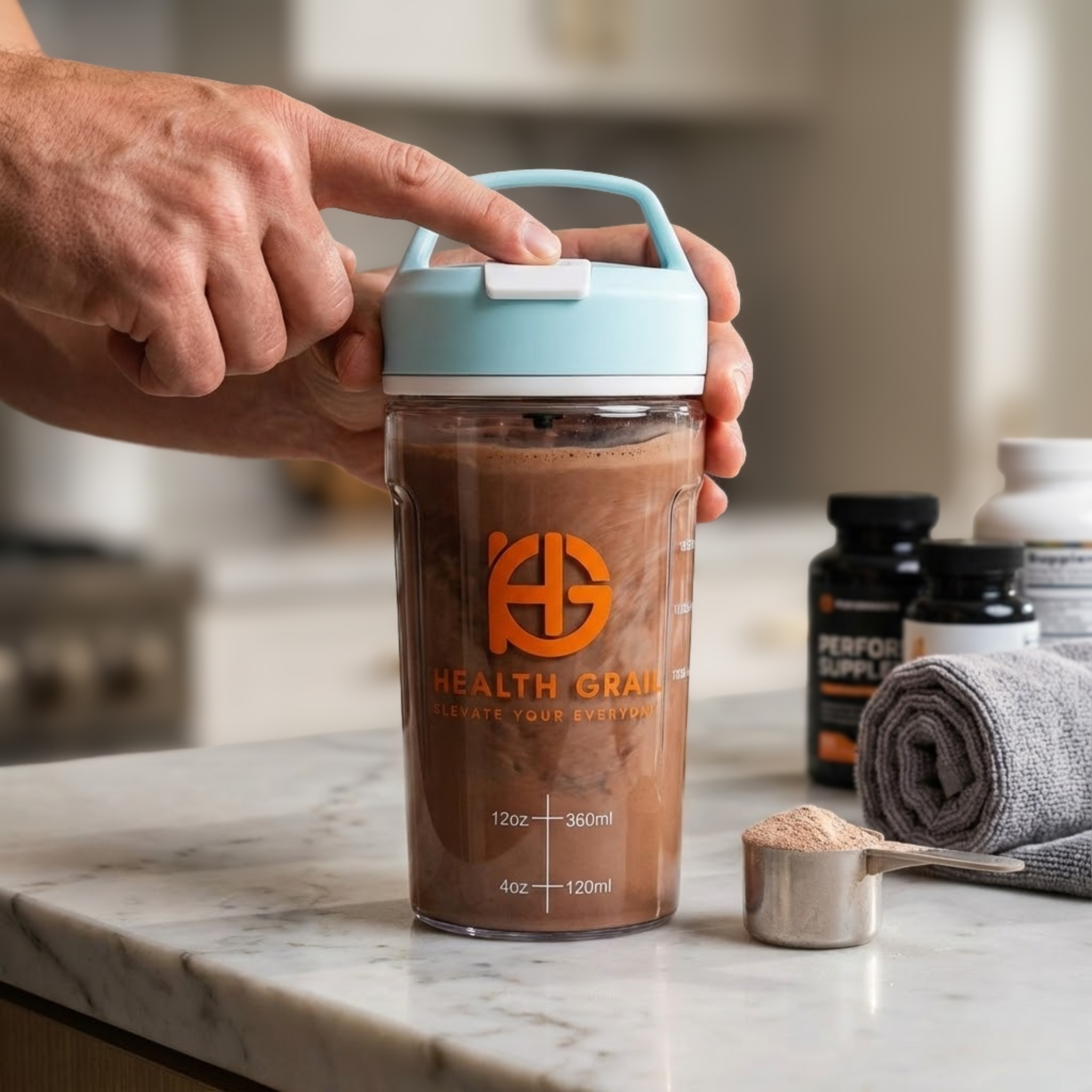
Because it is unflavored, it can fit into water, a protein shake, or another compatible beverage. Follow the physical label for serving and usage directions.
Keep it simple:
Creatine is not reserved for elite competitors or bodybuilding stages. It can be a practical performance tool for everyday athletes who want to support the work they are already doing.
Elevate your everyday with a routine you can repeat.
One ingredient. Five grams per labeled serving. Built for daily consistency.
Medically cleared beginners may consider creatine, but the priority should remain learning proper technique, training consistently, eating adequately, and following the product label.
Health-Grail Creatine Monohydrate does not list caffeine on its current Supplement Facts panel.
Creatine is commonly used consistently rather than only on workout days. Follow the physical product label and professional guidance.
No. It can support training performance, but muscle gain depends on resistance training, nutrition, recovery, genetics, and consistency.


